The Sovereign’s Shield – Takrut Maha Rangap Praab Hongsa
The Spiritual Might of King Naresuan
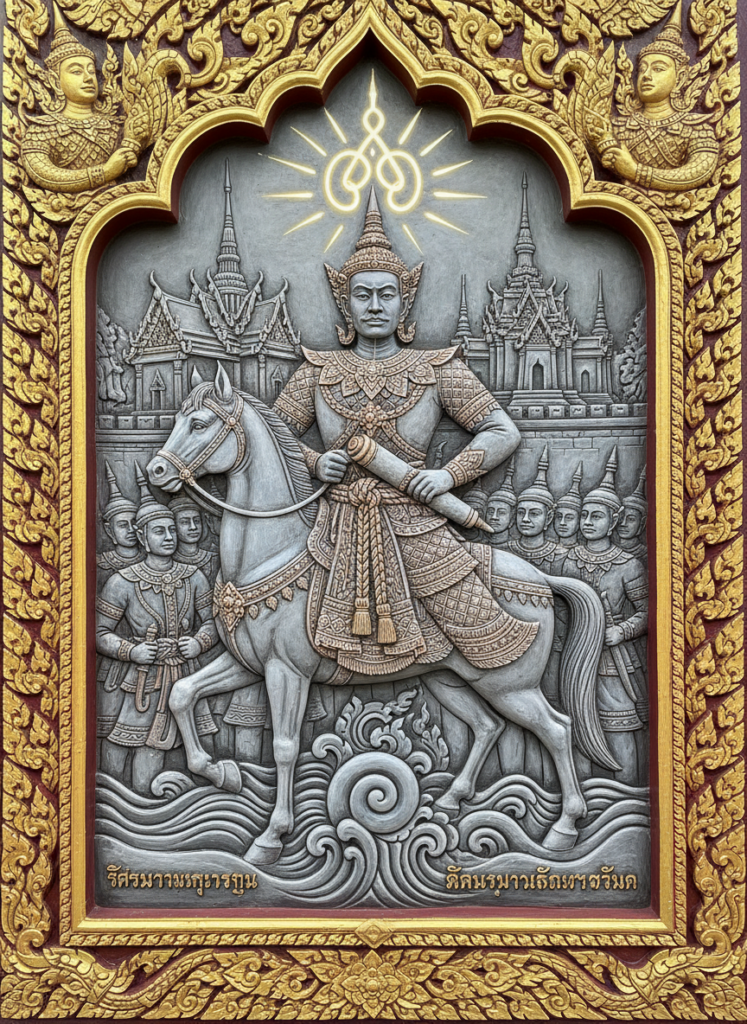
In the annals of Thai history, King Naresuan the Great (Somdet Phra Naresuan Maharat) stands as the quintessential warrior-monarch. His reign was not merely a series of military victories, but a testament to the synergy between martial prowess and spiritual Wicha (sacred magic).
In an era where the destiny of a nation was decided on the edge of a sword, the Takrut—sacred metal or leather scrolls inscribed with esoteric scripts—served as the ultimate armor for the soul.
The Talismans of the Campaign
King Naresuan’s reliance on sacred artifacts was rooted in the belief that a leader must possess ‘Barami’ (merit) and protective ‘Putta-kun’ (Buddhist virtues). Two legendary Takrut lineages are inextricably linked to his name:
- Takrut Maha Rangap Praab Hongsa (Great Suppression of Hongsa): This was the talisman of the high command. It was consecrated specifically to suppress the influence of the Hongsawadi (Burmese) empire. Beyond physical protection, it was believed to manipulate the “fate of the field,” allowing the King to stabilize the national destiny during the most desperate campaigns.
- Takrut Naresuan Tang Tua (Self-Establishment): This scroll carries a profound metaphor. It honors the King’s own rise from a hostage prince in Burma to the liberator of Ayutthaya. It is highly revered by those facing severe adversity, as it is believed to provide the spiritual strength to “rise after a fall,” turning total defeat into absolute sovereignty.
The Tradition of the Takrut Tone
While the King wore royal-tier talismans, his soldiers and commanding generals were often protected by the Takrut Tone—a single, heavy scroll worn around the waist. This fostered a culture of Kongkraphan (invulnerability), where the belief in the sacred script provided the psychological and spiritual fortitude to face overwhelming odds.
A Lasting Legacy
This ancient tradition did not vanish with the fall of the Ayutthaya Kingdom. Instead, it evolved. The complex Wicha used by Naresuan’s court became the foundation for the Takrut Maha Jakkapatirach (Great Emperor Takrut), later consecrated by legendary monks like Luang Por Kong.
To this day, the Takrut remains a symbol of the enduring Thai belief that true power is a blend of skill, courage, and divine protection.